How to Spot Truly Authentic Vietnamese Restaurants in Ottawa (A Local’s Checklist)
Ottawa’s Vietnamese food scene has grown rapidly over the past decade, but growth brings imitation. Menus multiply, signage looks familiar, and “pho” appears everywhere—yet not every bowl tells the same story. Authentic Vietnamese restaurants reveal themselves through discipline, restraint, and cultural fidelity, not marketing shortcuts. This checklist breaks down exactly how locals distinguish the real from the rehearsed, using observable details that matter at the table.
Why Authenticity Matters in Ottawa’s Vietnamese Food Scene
Authenticity is not nostalgia; it is precision. Vietnamese cuisine depends on balance—sweetness from rock sugar, umami from long-simmered bones, brightness from fresh herbs, and depth from toasted spices. When shortcuts replace technique, the balance collapses.
Ottawa’s winters, diverse dietary needs, and multicultural diners demand consistency and integrity. Restaurants that honor traditional methods deliver bowls that satisfy year-round, whether for a quick lunch or late-night comfort. This checklist focuses on what authentic kitchens do every single day.
The Broth Test: The Foundation of Real Vietnamese Cooking
Clear, Aromatic, and Layered—Never Murky
Authentic pho broth is crystal-clear yet deeply aromatic. Cloudy broth usually signals rushed boiling or pre-made concentrates. Proper broth is simmered for hours, bones carefully blanched, impurities skimmed, and spices toasted before infusion.
A well-executed bowl reveals star anise, cinnamon, and clove without overpowering beef or chicken. If the aroma hits before the bowl lands, the kitchen is doing something right.
For diners who want to understand how traditional broth defines Vietnamese food, this deep dive into Vietnamese food like pho explains why technique matters more than garnish.
Consistency Across Visits
Authentic kitchens produce the same broth on Monday afternoon and Saturday night. Variability signals outsourcing or inconsistent prep. Regulars notice when flavor drifts—and so do locals.
Menu Discipline: Less Is More in Authentic Vietnamese Restaurants
Focused Menus Signal Confidence
Real Vietnamese restaurants do not attempt to serve everything. A tight menu—pho, vermicelli bowls, banh mi, a few rice plates—suggests mastery. Overextended menus often mask frozen components or generic sauces.
Look for specialization rather than novelty. A restaurant known for pho should treat pho as the centerpiece, not one option among dozens.
Clear Regional Identity
Northern-style pho differs from southern interpretations in sweetness and herb usage. Authentic restaurants lean into a specific regional style instead of blending everything into a neutral, crowd-pleasing compromise.
Herb Trays and Fresh Components: The Non-Negotiables
Herbs Are Served Whole, Not Wilted
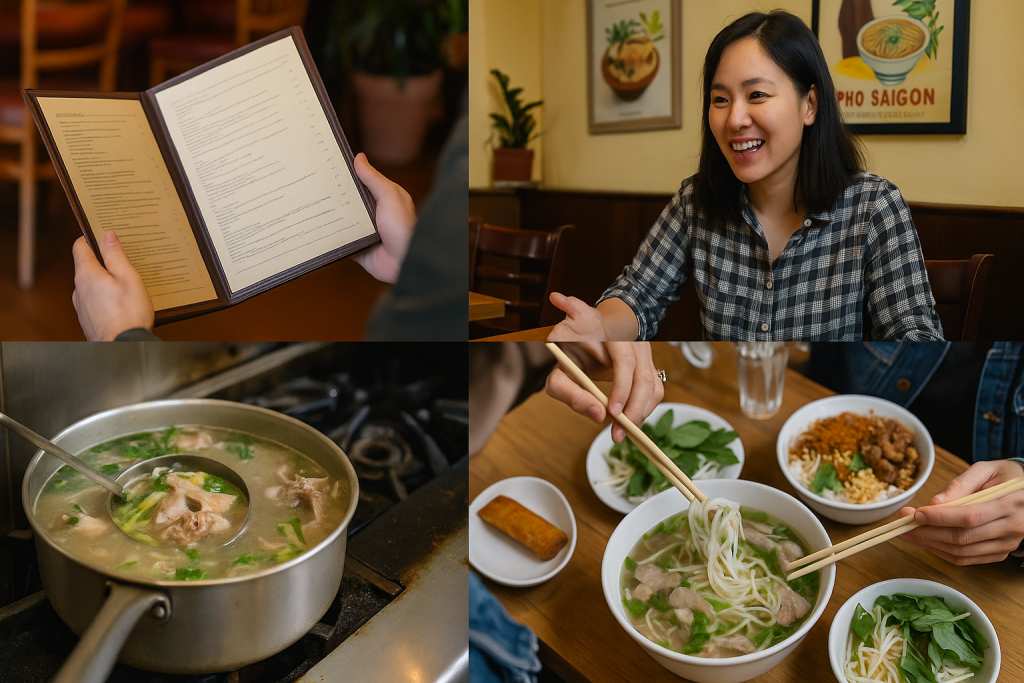
Thai basil should be fragrant, bean sprouts crisp, cilantro vibrant. Pre-chopped herbs oxidize quickly and lose character. Authentic kitchens prep herbs daily and serve them generously.
Customization Is Encouraged, Not Restricted
Vietnamese dining is interactive. Diners adjust lime, chili, and herbs to taste. Restaurants that discourage customization often rely on pre-balanced shortcuts rather than true broth depth.
Spice, Heat, and Balance: Authentic Vietnamese Food Is Not “One-Note”
Vietnamese cuisine is often misunderstood as either bland or fiery. Authentic food sits between those extremes.
A proper spice balance is explained clearly in Is Vietnamese food spicy?, where heat enhances—not overwhelms—the dish. Kitchens that understand this provide chili oil, fresh chilies, and sauces separately, letting diners decide.
Ingredient Transparency and Dietary Awareness
Gluten-Free and Naturally Clean Cooking
Traditional Vietnamese cuisine relies heavily on rice noodles, fresh herbs, and clear broths, making many dishes naturally gluten-free. Restaurants that understand their ingredients can confidently guide diners, as outlined in Is Vietnamese food gluten free?.
Health Without Hype
Authenticity does not mean “diet food,” yet Vietnamese meals are inherently balanced. Long-simmered broths, lean proteins, and fresh greens contribute to lighter digestion and sustained energy. The nutritional context is explored further in Is Vietnamese food healthy?.
The Kitchen Clues Locals Notice Immediately
Stock Pots and Steam
Large stock pots in active use indicate in-house broth production. If a kitchen lacks visible broth prep, authenticity is questionable.
Early Prep, Late Service
Authentic pho kitchens start early. Broth requires time. Restaurants opening late with “fresh pho” deserve scrutiny unless overnight simmering is evident.
Service Style: Quiet Efficiency Over Scripted Hospitality
Vietnamese hospitality is warm but efficient. Orders are taken quickly, food arrives fast, and attention stays on the meal—not performance. Overly scripted greetings or aggressive upselling often feel out of place in truly authentic spaces.
Ottawa Location Matters—but It’s Not Everything
Authentic Vietnamese restaurants appear across Ottawa, from downtown to neighborhood pockets. Proximity to cultural hubs helps, but authenticity is about operations, not postal codes.
For diners navigating options, Vietnamese restaurant in Ottawa provides a helpful starting point grounded in local experience.
Beyond Pho: Authentic Kitchens Excel Across the Menu
Pho may be the benchmark, but authenticity shows up everywhere:
- Banh mi with airy baguettes and balanced pickles
- Vermicelli bowls layered, not drowned in sauce
- Spring rolls crisp, light, and herb-forward
Restaurants that execute across categories demonstrate true culinary command rather than reliance on a single flagship dish.
Cultural Continuity and Community Trust
Authentic Vietnamese restaurants often serve multi-generational families. Regulars are greeted without theatrics. Menus evolve slowly, if at all. These places earn loyalty over years, not review cycles.
Understanding Vietnamese food culture within Canada’s multicultural framework aligns closely with broader culinary standards promoted by institutions like Canada’s Food Guide, which emphasizes balance, whole ingredients, and mindful preparation.
Ottawa’s own tourism authority highlights authentic cultural dining as a pillar of the city’s food identity, reinforcing why real Vietnamese kitchens matter to the capital’s culinary landscape: Ottawa Tourism – Culinary Experiences.
When Authenticity Extends Beyond the Dining Room
Truly authentic Vietnamese restaurants often offer catering that respects tradition rather than diluting it. Broth travels well when prepared correctly, and menus scale without compromise.
Those exploring event dining with Vietnamese cuisine can reference Pho catering ideas for your next event in Ottawa for insight into how authenticity translates off-site.
The Final Local Checklist
Before declaring a Vietnamese restaurant “authentic,” locals quietly verify:
- Broth clarity, aroma, and consistency
- Menu focus and regional identity
- Fresh, whole herbs served daily
- Respect for customization and balance
- Ingredient transparency and cultural confidence
- Quiet efficiency over forced branding
When these boxes are checked, authenticity speaks for itself—no explanation required.
Experience Authentic Vietnamese Cuisine in Ottawa
For diners ready to apply this checklist in real time, explore menus, philosophy, and heritage directly through Pho By Night. Learn more about the story behind the kitchen on the About Us page, browse the full offerings via Our Menu, or plan gatherings with Catering. For reservations, inquiries, or private events, connect through the Contact Us page.
FAQs
What makes Vietnamese food authentic?
Authenticity comes from traditional techniques, long-simmered broths, fresh herbs, balanced flavors, and cultural consistency—not décor or menu size.
Is pho always the best way to judge authenticity?
Pho is the benchmark, but authentic kitchens show consistency across banh mi, vermicelli bowls, and appetizers.
Can Vietnamese food be both authentic and halal-friendly?
Yes. Many Ottawa kitchens adapt proteins while preserving traditional broth and preparation methods.
Does authentic Vietnamese food have to be spicy?
No. Heat is optional and adjustable. Balance always comes first.
Why do authentic restaurants keep small menus?
Focused menus reflect mastery, reduce shortcuts, and ensure consistency across every dish.